PracticalHomeEd
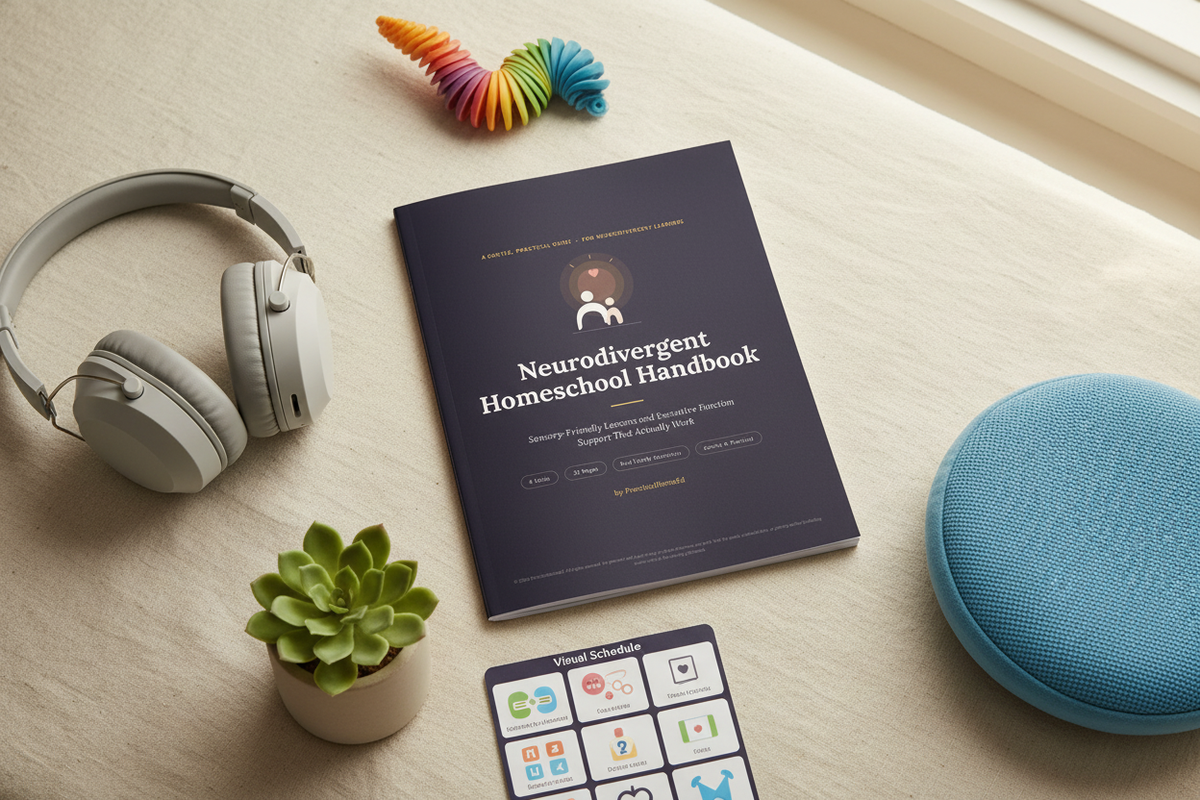
Neurodivergent Homeschool Handbook
Neurodivergent Homeschool Handbook
Couldn't load pickup availability
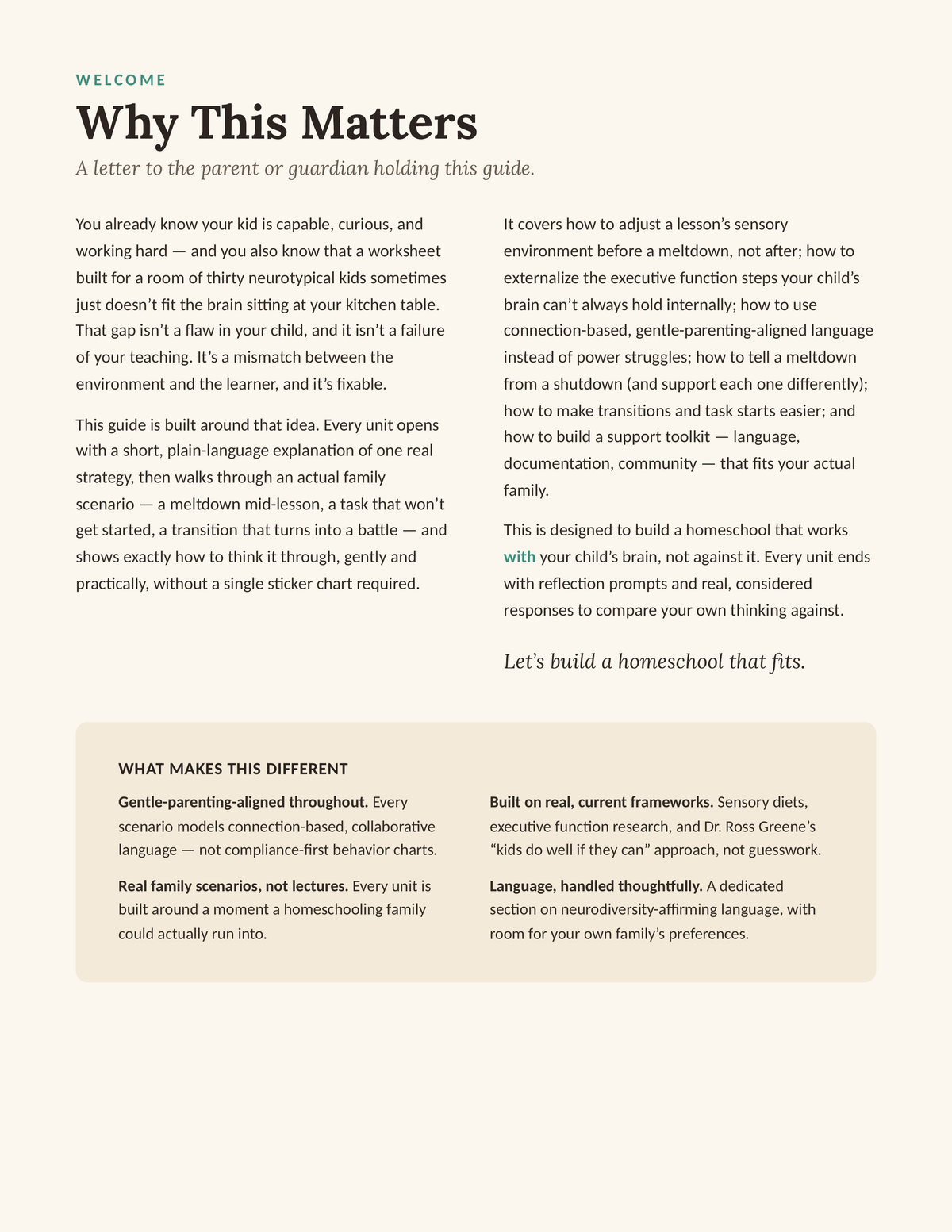
You already know your kid is capable, curious, and working hard. You also know that a worksheet built for a room of thirty neurotypical kids sometimes just doesn't fit the brain sitting at your kitchen table. That gap isn't a flaw in your child, and it isn't a failure of your teaching. It's a mismatch between the environment and the learner — and it's fixable.
Neurodivergent Homeschool Handbook is a 23-page practical guide for homeschooling families navigating sensory differences and executive function challenges. Six units, each built around a real family scenario — a meltdown mid-lesson, a task that won't get started, a transition that turns into a battle — and showing exactly how to think it through, gently and practically, without a single sticker chart required.
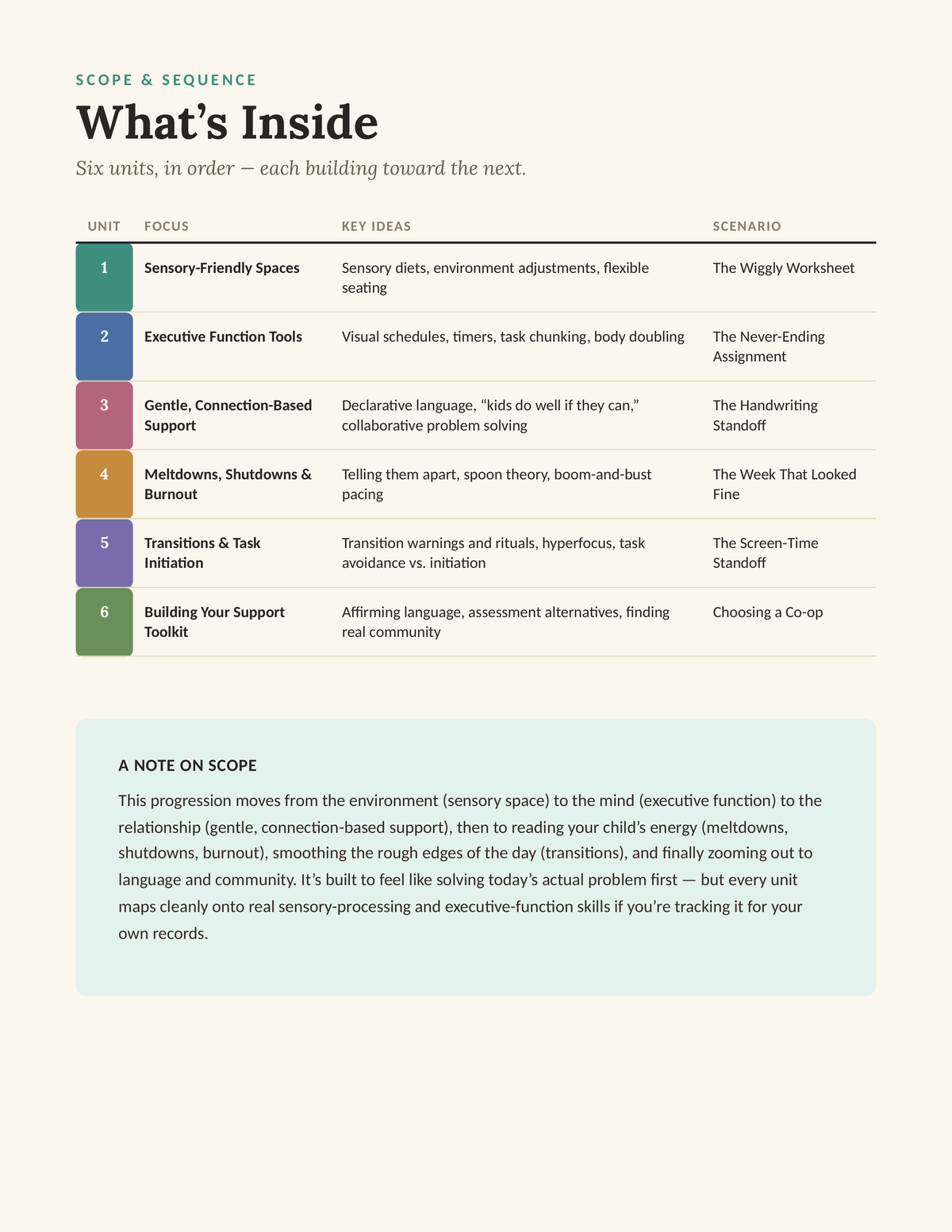
The 6 Units
- Unit 1 — Sensory-Friendly Learning Spaces: Sensory diets, environment adjustments, flexible seating (Scenario: The Wiggly Worksheet)
- Unit 2 — Executive Function Tools: Visual schedules, timers, task chunking, body doubling (Scenario: The Never-Ending Assignment)
- Unit 3 — Gentle, Connection-Based Support: Declarative language, "kids do well if they can," collaborative problem solving (Scenario: The Handwriting Standoff)
- Unit 4 — Meltdowns, Shutdowns & Burnout: Telling them apart, spoon theory, boom-and-bust pacing (Scenario: The Week That Looked Fine)
- Unit 5 — Transitions & Task Initiation: Transition warnings and rituals, hyperfocus, task avoidance vs. initiation (Scenario: The Screen-Time Standoff)
- Unit 6 — Building Your Support Toolkit: Affirming language, assessment alternatives, finding real community (Scenario: Choosing a Co-op)
What Makes This Different
- Gentle-parenting-aligned throughout — every scenario models connection-based, collaborative language, not compliance-first behavior charts
- Built on real, current frameworks — sensory diets, executive function research, and Dr. Ross Greene's "kids do well if they can" approach
- Real family scenarios, not lectures — every unit is built around a moment a homeschooling family could actually run into
- A full reflection guide on every unit — considered responses to compare against, not a single right-or-wrong answer
- Language, handled thoughtfully — a dedicated section on neurodiversity-affirming language, with room for your own family's preferences
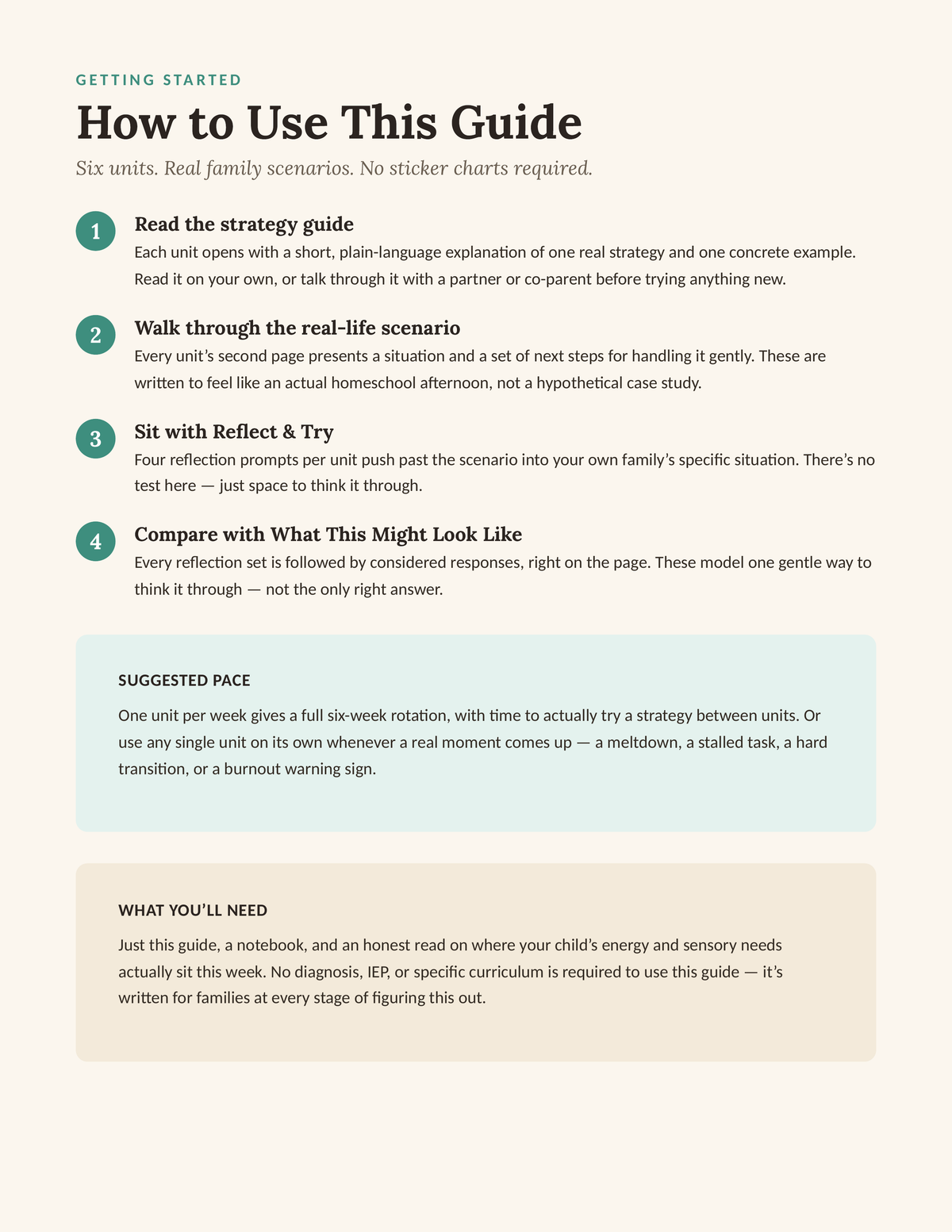
- One unit per week = a complete six-week rotation, or use any single unit whenever a real moment comes up
For personal, single-family, or single-classroom use only. Not for resale, redistribution, or posting online.
Share